Haas was the first business I co-founded, where I stopped being just a developer and started thinking like a founder.
Highlights
- E2E product owner: Built and shipped a sentiment measurement platform end-to-end (React, Express, GraphQL, Python) serving multiple businesses
- Built for scale: Owned the full AWS infrastructure (deployment, scaling, reliability), keeping the system fast and always up
- Built as founder: Led user research and pain-point discovery, translating insights into product decisions
- AI-driven conversation: Developed a smart conversational model that dynamically adapted follow-up questions based on user sentiment
- Start-up lessons: Pivoted from consumer feedback to employee happiness, serving 3-4 customers including one of the biggest youth sport teams in the Netherlands (detecting bullying cases). Validated that identifying the right customer matters more than perfecting the technology
Haas was a sentiment measurement platform. The idea was simple: deploy a feedback tool via QR codes in physical locations (coffee shops, stores, events) and let consumers share how their experience was. By swiping a rabbit left or right, users would engage in a dynamic, AI-driven conversation. On the other end, an analytics dashboard let businesses understand what their customers actually felt. Our unique selling point was that we made the whole thing fun.
Building end-to-end
This was the first product I built from scratch and deployed to production. The stack was React, Express and GraphQL with Styled Components, and it shipped fast. But the real challenge wasn’t the code. This was my first time owning infrastructure on AWS. I had never actually been in charge of deploying something, and so I had to figure out deployment, scaling, and keeping a system reliably live. Before I knew it, the system was fast, stable, and always up.
Understanding users
Up until Haas, I was mostly a developer. I’d never actually built anything for real users (technically speaking). This experience forced me to ask different questions: how do you find users, understand their pain points, and convert those pain points into problems your app actually solves? We discovered that our initial analytics suite (a set of standard visualizations) didn’t let businesses dive into what mattered. So we developed what we called a grid-based view, where hexagons represented particular entities or topics. At a glance, you could see what was green and what was red, and drill down into subsequent layers of detail.
The pivot
The harder question was whether we were serving the right customer at all. With two live applications (a consumer-facing frontend and an admin dashboard), we had to decide: fit the user to the solution, or rethink the problem entirely? We pivoted to employee happiness. Instead of “How was the service?”, we asked “How are you feeling?” The privacy-first design of our platform made it well-suited for sensitive contexts. We deployed it within organizations and even sport teams to surface issues like bullying.
What I learned
Two years in, fatigue had set in. The system worked and we were extracting interesting insights, but identifying the ideal customer proved to be a challenge we had started too late. It was a mistake I would never make again. Haas taught me that building great technology is necessary but not sufficient, and that the hardest problems in a startup aren’t technical.
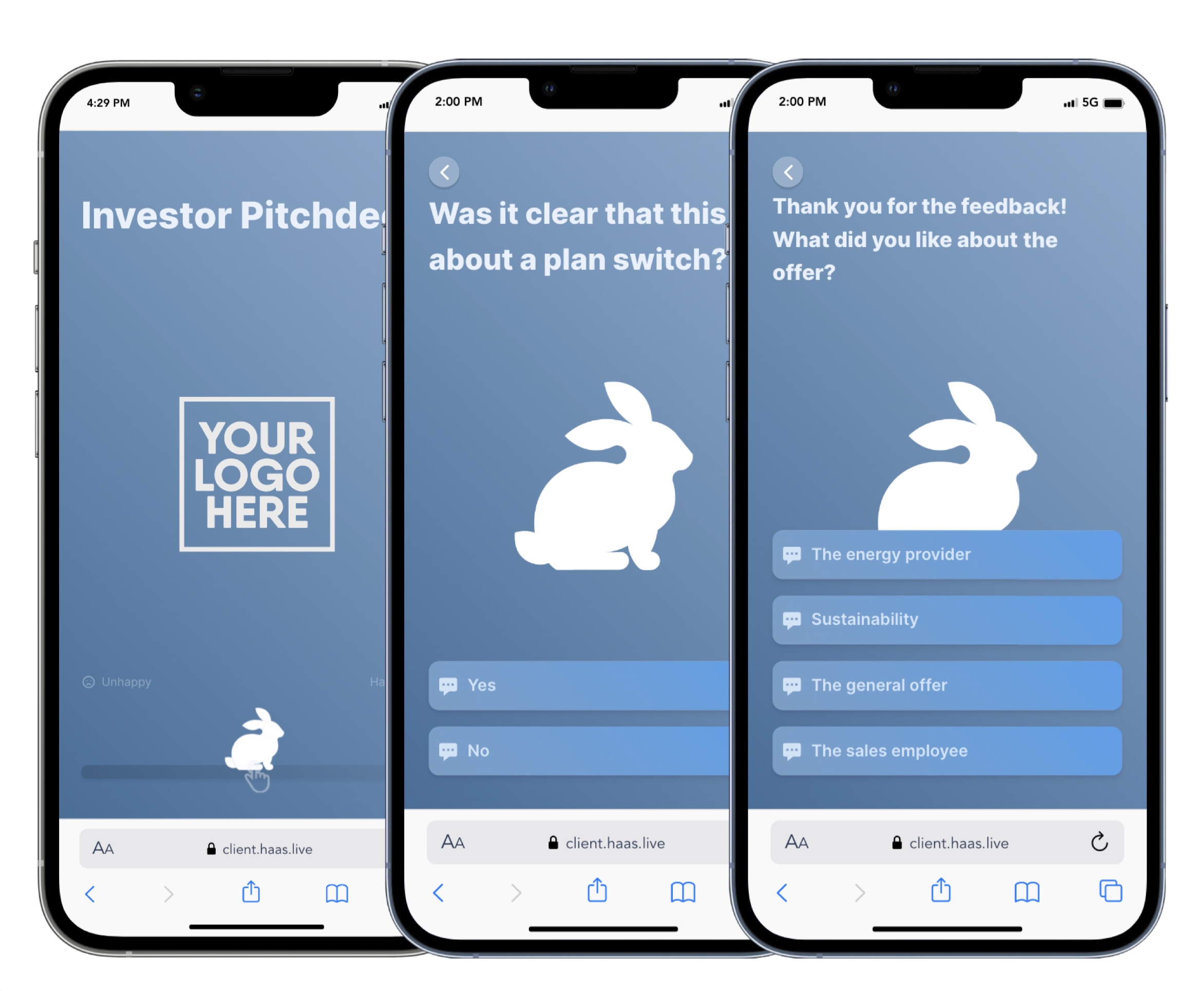
The Haas consumer app — a swipeable, AI-driven feedback experience deployed via QR codes.